WAPO Book Review Failure Humility -Bradatan

via Silent Lotus

At the start of his latest book, “In Praise of Failure: Four Lessons in Humility,” the philosopher Costica Bradatan notes without chagrin that when we consider our origins and our ultimate fate, humans are not very impressive. We are designed to fail, he emphasizes, and death is the framework for all our attempts to make something of ourselves. In a previous book, “Dying for Ideas,” he considered how philosophers across the ages wrestled with mortality. In “In Praise of Failure,” he looks at how various thinkers — Seneca, Mohandas Gandhi, Simone Weil, Emil Cioran, Yukio Mishima — detached themselves from an obsessive drive for worldly success by reckoning with failure and death. Bradatan wants us to grasp how striving to succeed prevents us from dealing with our mortality and hence from living a more meaningful life.

Failure and Flourishing

Failure and Flourishing

So why not make our setbacks more visible, asked researcher Melanie Stefan in a 2010 Nature letter? Instead of scholars hiding their failures and trumpeting their successes (which surely, she notes, can leave colleagues “feeling alone and dejected” when their work gets rejected), why not “compile an ‘alternative’ CV of failures”?

more like corroborating testimony than a root source,

if you see how I mean

Pre-Emergency

Well –
I always start with this one fact:
That of the four siblings in our family only one finished college,
And his degree is in “Recreation”. . .
If you-see-how-I-mean . . .

His one answer
For all things philosophical
Comes from a tenet
Of that Doctrinal Inculcation:

That 90% of the Enjoyment of any given Event
Is ANTICIPATION . . .
<Ah, gee, what I see is this:
That 90% of the Terror of any given doleful event
Is in the DREAD . . .but leave that there>

What I am anticipatin’ is this:

I’M GONNA GO MEDIEVAL
On the crabgrass
With the Pre-Emergent,
But not for six-months, yet . . .

For the rest of Autumn,
I’ll wait and watch to see
If my overseed will have taken . . .
Then the lawn will go dormant,
Covered in snow, unseen . . .

Until Spring,
Which will then be the Season of Retribution
When I repay the humiliation of this last summer
When crabgrass ran rampant, wild, over all of the yard . . .
Now will I bring Lawn Order
Good & Hard.


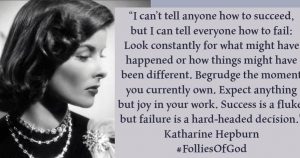
most of the time we fail

“What a good actor–a real actor–is always trying to do is very difficult, almost impossible, so most of the time we fail. Most of the time I fail. Because what I’m after is perfection, truth, reality: Truth in art. This is exceedingly rare. It’s very, very hard to achieve and overwhelming to maintain. So I fail a lot. But if I keep reaching for that perfection, that connection to the script, to the actors, to the audience, I’m becoming a better actor. I’m growing. I’m doing the right work. If you find someone who claims they are always satisfied, always good, a professional who hits the marks, you are not looking at an actor. I’m not going to say what you’re looking at, but it’s not an actor. It’s not an artist. I’m going to say it: What you have is a performer. I am not a performer.” –Kim Stanley/Interview with James Grissom/1992/Photo of Stanley from the 1958 film “The Goddess”

Follies of God

bricollage book release on Amazon . . .

242 pages.

Available on Amazon

Preface, a quote from Paul Metcalf, after David Kadlec, after Claude Levi-Strauss

David Kadlec, in an unpublished essay, describes the theory of bricolage, as developed by the French anthropologist, Claude Levi-Strauss: “Bricolage is distinguished from the work of the craftsman insofar as the materials used are those salvaged from the wreckage of previous constructions rather than materials designed specifically for the task at hand. Levi-Strauss views mythical thought, which draws from an extensive but limited repertoire, as a kind of intellectual bricolage. New myths can be wrought exclusively from the fragments of old ones.”

Fragments of old myths, old voices are caught up as they float to the surface. Original meanings may be lost or incomprehensible or conceived only in the abstract. But carefully and patiently put together in new relationships and in a current context, they are charged with new force.

In our multiethnic, multicultural, severely disjointed world, bricolage may be our most natural mode.

Faulkner Failure

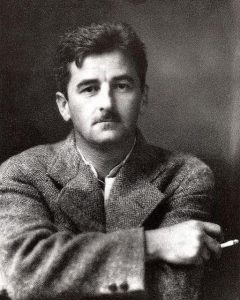
William Faulkner wrote The Sound and the Fury five separate times, “trying to tell the story, to rid myself of the dream.” “It began with a mental picture,” he told Jean Stein in 1956, “of the muddy seat of a little girl’s drawers in a pear tree.” He couldn’t seem to get it right, to find the picture’s grammar, or hear it. (According to Didion, “It tells you. You don’t tell it.”) This was part of the work, this getting it wrong—Faulkner believed failure was what kept writers going, and that if you ever could write something equal to your vision, you’d kill yourself.
The Paris Review