Month: October 2020
Code hidden in Stone Age art may be the root of human writing
Whether or not the symbols are actually writing depends on what you mean by “writing”, says d’Errico. Strictly speaking, a full system must encode all of human speech, ruling the Stone Age signs out. But if you take it to mean a system to encode and transmit information, then it’s possible to see the symbols as early steps in the development of writing. That said, cracking the prehistoric code (see “What do they mean?“) may prove impossible. “Something we call a square, to an Australian Aborigine, might represent a well,” says Clottes.

poetry -> memory -> place
What Kelly proposes in her new book The Memory Code is that sites such as Stonehenge and the Nasca lines are actually memory spaces.
<snip>
The Euahlayi would memorise star maps at night and learn the songs that talk about their relationship to the land. Each star was associated with a landscape feature, such as a waterhole.Later in the year, they would sing the song as they travelled across country by day. These songline routes became the foundation of some of our highway networks that criss-cross the country.
Rather than navigating by the stars, the stars themselves serve as a memory space.
poetry is the memory code.
Rimbaud & Verlaine (The New Yorker)
He and Verlaine both changed poetry, in ways that continue to affect it in our own time. Dylan’s mention of them was not mere name-dropping. By the testimony of Dylan’s mentor Dave Van Ronk, it was a paperback copy of modern French verse, heavy with underlining—which a fresh-from-Minnesota Dylan took down from Van Ronk’s bookshelf, on Macdougal Street, in 1960—that provided the impetus for that poet’s own stream of imagery. Rimbaud’s “A Season In Hell” gave the idea that poetry should be, first of all, a journey into extreme experience, evidenced not by a coherent evocation of a story but by subversive images and sensual evocations that subvert logic and language itself. (Dylan’s great songs from “Blonde on Blonde”—“Sad-Eyed Lady of the Lowlands” and “Visions of Johanna”—are straight applications of Rimbaud’s symbolist methods to popular music.)
Max Nix
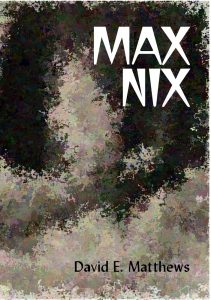 92 pages
David E. Matthews is saddened by the direction of events, but more perplexed that things are not worse than, or better than, they actually are, if what people believe is true. He has become suspicious – not to say paranoid – of people who seem positive of what is real, and true. The reverberations and resonances of literature is all that sustains him.
Available at Amazon