Take words, for instance, those mesmerising language units that package meaning with phenomenal density. When you show a word to someone who can read it, they not only retrieve the meaning of it, but all the meanings that this person has ever seen associated with it.
They also rely on the meaning of words that resemble that word, and even the meaning of nonsensical words that sound or look like it.
And then there are bilinguals, who have the particular fate of having words in different languages for arguably overlapping concepts. Speakers of more than one language automatically access translation in their native language when they encounter a word in their second language.
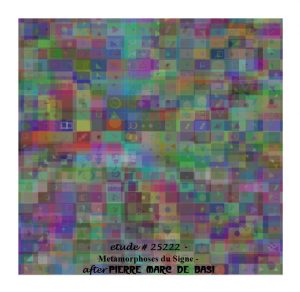
Recently, we have been able to show that even an abstract picture – one that cannot easily be taken as a depiction of a particular concept – connects to words in the mind in a way that can be predicted.
It does not seem to matter how seemingly void of meaning an image, a sound, or a smell may be, the human brain will project meaning onto it. And it will do so automatically in a subconscious (albeit predictable) way, presumably because the bulk of us extract meaning in a somewhat comparable fashion, since we have many experiences of the world in common.