He and Verlaine both changed poetry, in ways that continue to affect it in our own time. Dylan’s mention of them was not mere name-dropping. By the testimony of Dylan’s mentor Dave Van Ronk, it was a paperback copy of modern French verse, heavy with underlining—which a fresh-from-Minnesota Dylan took down from Van Ronk’s bookshelf, on Macdougal Street, in 1960—that provided the impetus for that poet’s own stream of imagery. Rimbaud’s “A Season In Hell” gave the idea that poetry should be, first of all, a journey into extreme experience, evidenced not by a coherent evocation of a story but by subversive images and sensual evocations that subvert logic and language itself. (Dylan’s great songs from “Blonde on Blonde”—“Sad-Eyed Lady of the Lowlands” and “Visions of Johanna”—are straight applications of Rimbaud’s symbolist methods to popular music.)
Category: Blog


Diablos de Polvo from Shadow Rock, South of South Mountain
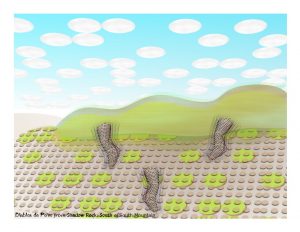
How is this visual poetry? you may ask with Justification . . . the diablos are composed of text . . .

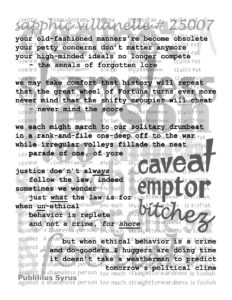
Boethius – Wheel of Fortune
In its obvious outlines, her argument has this shape. Like a doctor, Philosophy begins with gentle remedies and then, when her patient is ready for them, uses stronger medicine. She begins by arguing that the Prisoner shouldn’t blame fortune for taking away the gifts she had happened to give him and that, anyway, these goods of fortune are not true goods at all. The Wheel of Fortune turns ineluctably, and no one can expect to be forever at the top enjoying the best that life has to offer. Gradually, she leads the Prisoner to see that all goodness comes from one source, the highest good, which is identified with God. Only by adhering to this good can a person be truly happy.